
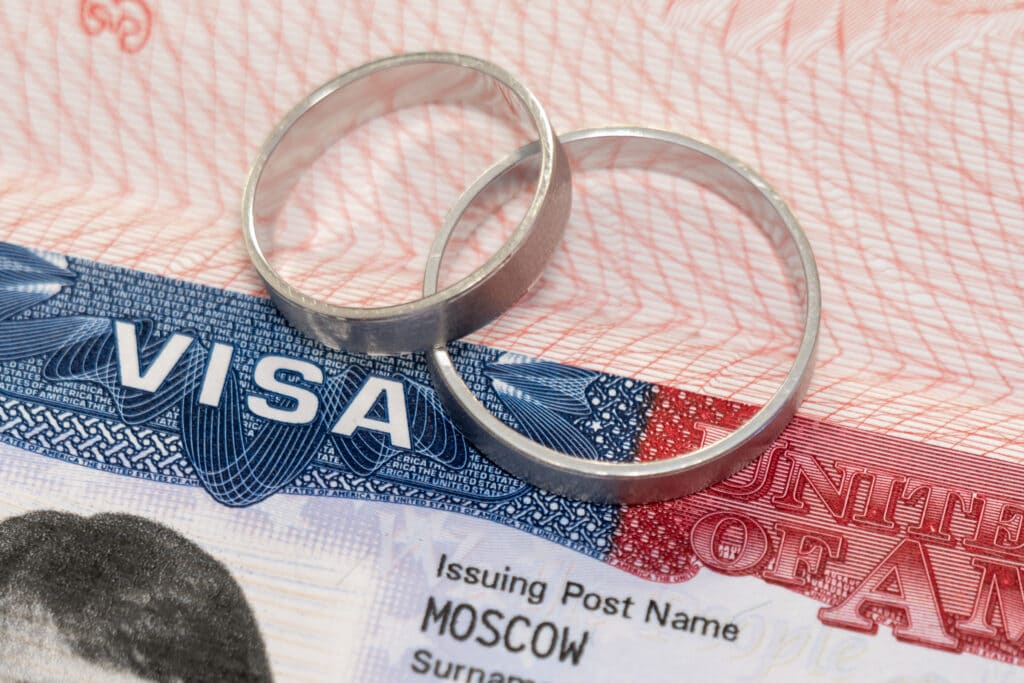
Bringing your fiancé to the United States to get married is an exciting milestone, but the K-1 fiancé visa process can feel overwhelming without proper guidance. Understanding the requirements, timeline, and costs involved helps you navigate this journey with confidence and avoid common mistakes that lead to delays or denials.
This comprehensive guide walks you through every step of the K-1 fiancé visa in Virginia Beach, from determining eligibility to applying for a green card after marriage. Whether you’re just getting started or ready to file, this guide covers what you need to bring your loved one to the United States.
What Is a K-1 Fiancé Visa?
A K-1 fiancé visa is a non-immigrant visa that allows a U.S. citizen to bring their fiancé from abroad to the United States for the purpose of getting married. Once your fiancé enters the U.S. on a K-1 visa, you have 90 days to legally marry. After marriage, your spouse can apply for an adjustment of status to become a lawful permanent resident.
The K-1 visa also allows qualifying children of your fiancé (who are under age 21 and unmarried) to accompany them to the United States on K-2 visas.
Who Can Apply for a K-1 Fiancé Visa?
The K-1 visa applicant must be your fiancé who currently lives outside the United States. You and your fiancé must have met in person at least once within the two years before filing your petition, with very limited exceptions for extreme hardship or cultural customs. Both parties must be legally free to marry and have a genuine intent to marry within 90 days of your fiancé’s arrival in the U.S.
Who Can Sponsor a K-1 Visa?
Only U.S. citizens can sponsor a K-1 fiancé visa. Lawful permanent residents (green card holders) are not eligible to petition for a fiancé visa and must instead marry their partner and file for a spousal immigrant visa. As a sponsor, you must also meet minimum income requirements to demonstrate you can financially support your fiancé, typically at least 125% of the federal poverty guidelines for your household size.
K-1 Fiancé Visa Requirements
Successfully obtaining a K-1 fiancé visa requires meeting specific eligibility criteria and providing comprehensive documentation to prove your relationship is genuine.
Eligibility Requirements
The key eligibility requirements for a K-1 fiancé visa include:
- The petitioner must be a U.S. citizen
- Both parties must be legally free to marry (divorced from previous spouses, if applicable)
- You must have met your fiancé in person within the past two years
- You must have a genuine relationship with the intent to marry
- You must marry within 90 days of your fiancé’s arrival in the United States
- The petitioner must meet minimum income requirements to support the beneficiary
Required Documents
The K-1 visa application requires substantial documentation to prove your relationship and eligibility. Essential documents include:
- Form I-129F (Petition for Alien Fiancé)
- Proof of U.S. citizenship (passport, birth certificate, or naturalization certificate)
- Evidence of relationship (photos together, communication records, travel itineraries)
- Proof of an in-person meeting within the last two years
- Statements from both parties declaring intent to marry within 90 days
- Form I-134 (Affidavit of Support) with financial evidence
- Civil documents (birth certificates, divorce decrees, police certificates)
You can find more information on the USCIS K-1 visa overview page and download Form I-129F directly from USCIS.
Working with an immigration lawyer in Virginia Beach can help ensure all eligibility and documentation requirements are properly met.
Step-by-Step: K-1 Visa Application Process in Virginia Beach
The K-1 visa process involves multiple stages with different government agencies:
Step 1: File Form I-129F with USCIS. The U.S. citizen petitioner files the petition with U.S. Citizenship and Immigration Services along with supporting documents and filing fees.
Step 2: USCIS Processing. USCIS reviews your petition, may request additional evidence, and issues an approval notice if everything is in order.
Step 3: National Visa Center (NVC) Processing. After USCIS approval, your case transfers to the NVC, which then forwards it to the U.S. embassy or consulate in your fiancé’s country.
Step 4: Embassy Interview. Your fiancé completes the required forms, undergoes a medical examination, and attends an interview at the U.S. embassy or consulate.
Step 5: Visa Issuance. If approved, the embassy issues the K-1 visa, allowing your fiancé to travel to the United States.
Step 6: Entry and Marriage. After the visa is issued, your fiancé must enter the U.S. within six months, and you must marry within 90 days of their arrival.
Step 7: Adjustment of Status. After marriage, your spouse files Form I-485 to adjust status to a lawful permanent resident.
Processing Times: How Long Does a K-1 Visa Take in Virginia Beach in 2026?
The K-1 fiancé visa process typically takes 12 to 18 months from filing to your fiancé’s arrival in the United States. However, processing times vary based on several factors, including USCIS processing backlogs, the complexity of your case, completeness and accuracy of your application, embassy scheduling and availability, and current immigration policies.
You can use the USCIS Processing Times tool for the most up-to-date processing times on Form I-129F at the service center handling your case.
How Much Does It Cost to Sponsor a K-1 Visa?
The K-1 fiancé visa process involves several fees:
- Form I-129F filing fee: $675
- K-1 visa application fee (DS-160): $265
- Medical examination: $200-$500 (varies by country)
- Adjustment of Status (Form I-485): $1,440
- Additional costs: passport photos, translations, and courier services
The total cost typically ranges from $2,500 to $3,500, not including travel expenses or attorney fees. For the most current fee information, visit the USCIS fee schedule.
What Happens After a K-1 Visa Is Approved?
Once your fiancé’s K-1 visa is approved, they may enter the United States using the K-1 visa, which is valid for a single entry within six months of issuance. You must then marry within 90 days of their arrival, a deadline that cannot be extended. After marriage, your spouse should immediately apply for adjustment of status using Form I-485 to obtain a green card.
Your spouse may also apply for work authorization (Form I-765) and advance parole (Form I-131), which allows them to travel outside the United States and re-enter while their adjustment of status is pending. Most applicants receive work authorization within 3-5 months of filing.
Common Mistakes to Avoid
Avoiding these common errors can prevent delays or denials:
- Submitting incomplete or incorrect forms
- Providing insufficient evidence of a genuine relationship
- Missing documents or failing to translate foreign documents properly
- Not meeting the in-person meeting requirement
- Failing to demonstrate adequate financial support
- Rushing the marriage before proper documentation
- Not understanding the 90-day marriage deadline
Thorough preparation and attention to detail are essential for a successful K-1 visa application.
K-1 Visa Process in Virginia Beach: What to Expect Locally
Virginia Beach residents do not file K-1 petitions locally. Instead, petitions are submitted to a USCIS service center assigned based on jurisdiction. After marrying and applying for adjustment of status, you may be required to attend an appointment at a local Application Support Center for fingerprinting and other biometric processing.
Virginia has several USCIS offices and ASCs. You can find the nearest USCIS office locations in Virginia using the USCIS office locator tool.
Military families stationed in Virginia Beach should be aware that deployment and frequent relocations can complicate the K-1 process, but don’t disqualify you from sponsoring your fiancé.
Helpful Resources & Official Tools
These official resources provide additional information and tools for K-1 visa applicants:
- USCIS K-1 Fiancé Visa Information
- Form I-129F Instructions
- Department of State Visa Information
- USCIS Case Status Online
- USCIS Contact Center: 1-800-375-5283
Do You Need an Immigration Lawyer in Virginia Beach?
While it’s possible to file a K-1 visa petition without legal assistance, working with an experienced immigration attorney significantly improves your chances of approval and helps avoid costly mistakes that delay the process.
An immigration lawyer can ensure your petition is complete and accurate, help you gather strong relationship evidence, prepare you for the interview process, handle requests for evidence efficiently, and navigate complex situations like previous visa denials or immigration violations.
At Artemisa Law, attorney Tatiana Mendez has extensive experience helping Virginia Beach couples successfully navigate the K-1 fiancé visa process. With a proven track record of approved cases and personalized attention to each client’s unique circumstances, Artemisa Law can guide you through every step of bringing your fiancé to the United States.
Contact Artemisa Law today to schedule a consultation and take the first step toward reuniting with your loved one.
FAQs
How difficult is it to get a K-1 visa?
The K-1 visa process is complex and requires substantial documentation, but it’s achievable with proper preparation. The approval rate is generally high for applicants who meet all requirements and provide strong evidence of a genuine relationship. Working with an immigration attorney increases your chances of approval.
How much income is needed for a K-1 visa?
The petitioner must earn at least 125% of the federal poverty guidelines for their household size. For 2026, this means approximately $22,000 annually for a household of two. If you don’t meet this requirement, a joint sponsor can help meet the financial threshold.
How long can you stay in the U.S. with a K1?
The K-1 visa allows a single entry to the United States, and you must marry your U.S. citizen petitioner within 90 days. You cannot extend this 90-day period. After marriage, you should immediately apply for an adjustment of status to remain in the U.S. legally while your green card is processed.
Can a K-1 visa be denied?
Yes, K-1 visas can be denied for various reasons, including failure to prove a genuine relationship, not meeting the in-person requirement, insufficient financial support, inadmissibility issues (criminal history, previous immigration violations), or incomplete documentation. Working with an immigration attorney helps avoid common denial reasons.